Tokyo's Remote Work Revolution Is Reshaping Who Works Where—and How Much They Earn
As companies across the capital embrace hybrid arrangements, neighbourhood job markets are fragmenting and salary expectations are being rewritten.
As companies across the capital embrace hybrid arrangements, neighbourhood job markets are fragmenting and salary expectations are being rewritten.
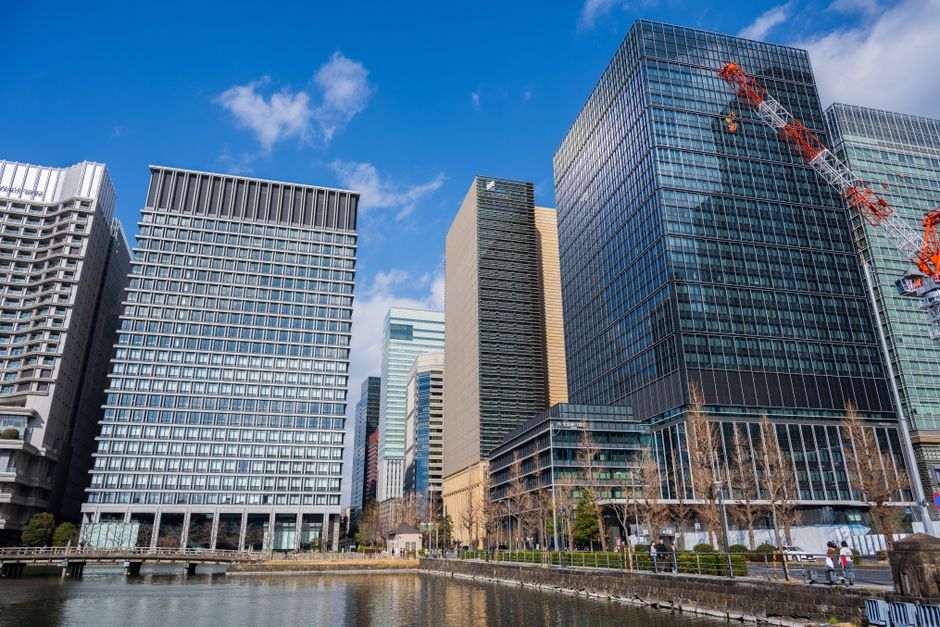
Walk through Shibuya's employment agencies on Centre-gai Street any weekday morning, and you'll notice something that would have been unthinkable five years ago: help-wanted posters emphasising flexibility over location, and candidates confidently negotiating salaries based on where they choose to work.
Tokyo's labour market is undergoing a fundamental shift. The once-rigid contract employment model—where workers clustered in Marunouchi's corporate towers or Shinjuku's financial district—is fracturing into a geography of opportunity that extends far beyond the 23 wards. This fragmentation is reshaping everything from neighbourhood commercial value to wage structures.
Data from the Tokyo Metropolitan Government's labour office shows that job postings explicitly offering remote or hybrid work tripled between 2023 and 2026, now accounting for approximately 31% of white-collar vacancies. Meanwhile, recruitment agencies report that candidates from outlying areas—Kawasaki, Saitama, even rural Tochigi prefecture—are increasingly competitive for Tokyo-based roles, undercutting traditional wage premiums that once favoured workers willing to endure two-hour commutes.
The economic consequences are tangible. Neighbourhood commercial rents around Minato and Chiyoda, long anchored to office foot traffic, have stabilised or declined by 8-12% since 2024, according to commercial real estate consultants. Conversely, residential-focused areas like Setagaya and Meguro are experiencing renewed demand, as knowledge workers reallocate. Coffee shops and co-working spaces in secondary commercial districts—particularly around Ikebukuro and Ueno—report occupancy increases of 40% year-on-year.
For the talent market itself, the implications are profound. Recruitment agencies in the Ginza area report a measurable shift in candidate expectations: younger professionals now routinely request three-day office weeks, with salary adjustments factored in accordingly. The psychological contract has changed. A mid-career marketing executive earning ¥6.5 million in 2023 while commuting from Chiba might now negotiate ¥5.9 million with full remote flexibility—a trade-off that would have seemed inconceivable during the pre-pandemic era of absolute office presence.
Yet the transformation is uneven. Sectors heavily dependent on in-person collaboration—hospitality, certain manufacturing operations, retail management—remain geographically tethered to Tokyo's core. And for junior employees, remote work often feels like a burden rather than a benefit; many major corporations still expect graduates to spend at least two years in the Marunouchi office, building institutional knowledge.
The real question facing Tokyo's business community is whether this reshuffling represents permanent structural change or temporary rebalancing. So far, the evidence suggests the former—and for a city long defined by its gravitational pull, that's genuinely novel.
This article was compiled by AI from the sources linked above and screened before publishing. See our editorial standards.
How does this story make you feel?
Spread the word
About this article
Published by The Daily Tokyo
Daily brief
Free, in your inbox before 7am. Weekdays.
More in Business