Tokyo's Office Flight to Suburbs Scrambles the City's Talent Wars
As companies abandon Marunouchi and Shibuya for cheaper space in Yokohama and Saitama, Tokyo risks losing its edge in attracting top professionals.
As companies abandon Marunouchi and Shibuya for cheaper space in Yokohama and Saitama, Tokyo risks losing its edge in attracting top professionals.
Tokyo's commercial property market is undergoing a quiet revolution. After decades of corporate gravitational pull toward central wards, a fundamental shift is redistributing Japan's office stock—and threatening to upend how the capital competes for talent.
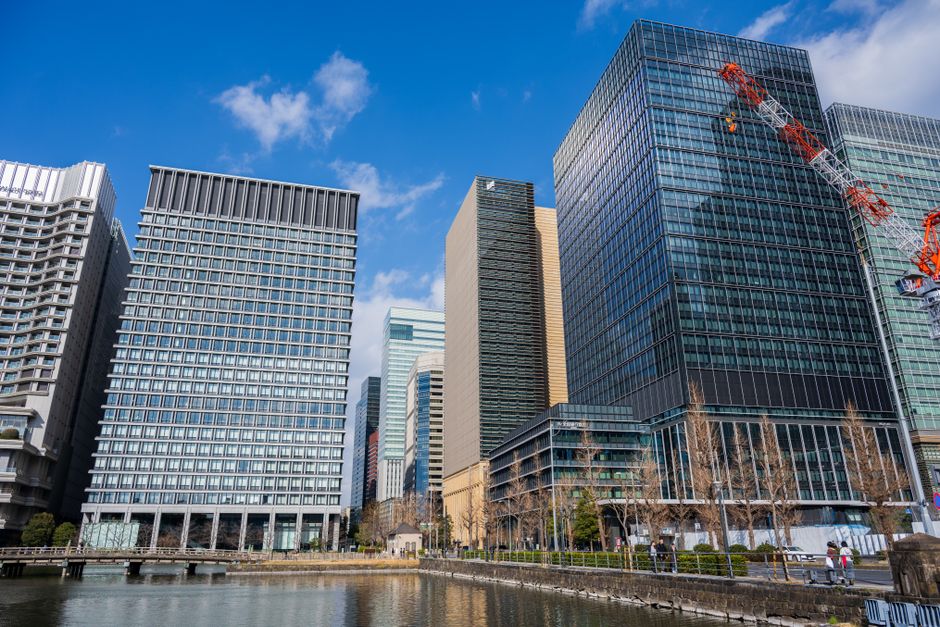
The numbers tell a stark story. Vacancy rates in Chiyoda Ward's traditional office heartland have climbed to 8.2 percent, the highest in a decade, while asking rents in Marunouchi have softened by roughly 12 percent since 2024. Meanwhile, suburban corridors—particularly along the Tokaido Shinkansen corridor to Yokohama and the Musashino line reaching into Saitama—are seeing explosive demand. New Grade-A office supply in Kawasaki has attracted everyone from mid-tier fintech firms to regional headquarters of international logistics companies.
The catalyst is familiar: hybrid work. As companies realised they could function with employees in the office two or three days weekly, the equation changed. Leasing 50,000 square metres in Shibuya made less sense than splitting operations across a compact central hub and suburban satellite offices with far lower per-square-metre costs.
"Companies are saving 30 to 40 percent on real estate by moving back-office and engineering teams to Yokohama or Kawasaki," says a spokesperson for a major Tokyo-based commercial property advisory firm. For junior talent especially—fresh graduates and mid-career professionals—this dispersal is reshaping opportunity geography.
The talent implications are significant. Tokyo's allure has long rested partly on density: limitless restaurants, cultural amenities, and the unspoken career currency of a central address. That proposition weakens when a developer job means commuting to Saitama instead of Roppongi. Early signs suggest companies are compensating with higher salaries for suburban postings, but that doesn't necessarily attract the same calibre of candidate.
Some sectors are adapting shrewdly. Life sciences and biotech firms, already drawn to clusters like the Kashiwa area east of Tokyo, are doubling down on suburban presence. Traditional finance, however, remains anchored to central locations—the Bank of Japan's proximity still matters for certain operations. Tech companies show a split personality: keeping design and strategy functions in Shibuya or Minato, while relegating engineering to cheaper precincts.
The risk for Tokyo is strategic hollowing. If the best and brightest increasingly view suburban office parks as career dead-ends, the city could gradually cede talent advantage to Singapore or Seoul, which have invested heavily in making secondary office zones feel genuinely appealing. Tokyo's property market is becoming more efficient. Whether that efficiency serves or undermines the city's long-term position remains an open question.
This article was compiled by AI from the sources linked above and screened before publishing. See our editorial standards.
How does this story make you feel?
Spread the word
About this article
Published by The Daily Tokyo
Daily brief
Free, in your inbox before 7am. Weekdays.
More in Business