Tokyo's Digital Archives Get Serious About Duplicate Image Cleanup This Week
A coordinated push across city-linked institutions to eliminate redundant visual data is reshaping how Tokyo manages its growing digital collections.
A coordinated push across city-linked institutions to eliminate redundant visual data is reshaping how Tokyo manages its growing digital collections.
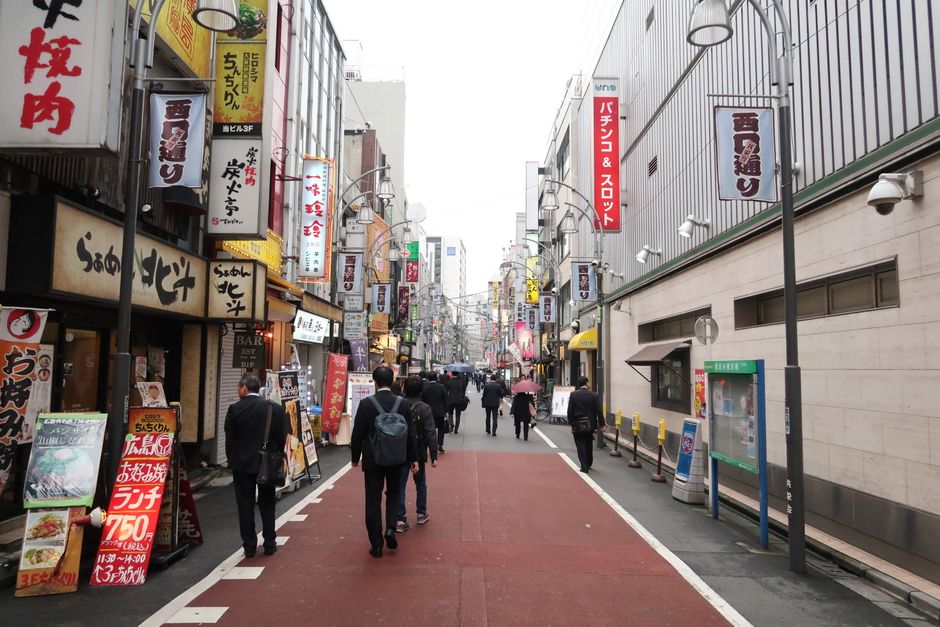
Tokyo's major public institutions moved this week to tackle one of the quieter crises in digital asset management: thousands of duplicate images clogging municipal and cultural archives, slowing retrieval systems and inflating storage costs at a time when yen weakness is pushing cloud-computing bills sharply higher.
The timing is not accidental. Japan's Ministry of Internal Affairs and Communications flagged redundant digital content as a priority issue in its fiscal 2026 digital governance review, published in late June. For Tokyo Metropolitan Government, which manages records across more than 40 departmental units, the administrative burden of duplicate image libraries has become a concrete budget problem, not an abstract IT concern.
The Tokyo Metropolitan Archives in Yūrakuchō confirmed this week that it has begun deploying perceptual hashing software across its photographic catalogue — a technique that identifies near-identical images even when file names, formats or compression levels differ. The project, running in parallel with the city's broader Digital Government Promotion Plan, targets roughly 200,000 image assets accumulated since the archive began digitising its physical collection in 2009.
Across town in Bunkyō Ward, the National Diet Library's Tokyo branch on Harumi-dori has been quietly running a similar audit since May. Staff there have been cross-referencing scanned document images that were uploaded in multiple batches over successive fiscal years, a duplication pattern common when scanning contracts were handed to different vendors. The library has not released final figures, but the audit scope covers materials from 2011 onward.
Private-sector pressure is adding urgency. Cloud storage pricing, denominated in US dollars and invoiced in yen, has risen sharply for Japanese organisations since the yen weakened past 155 to the dollar earlier this year. A mid-sized public institution storing 10 terabytes of image data on a major US platform now faces monthly bills that are, by rough industry calculation, around 30 percent higher in yen terms than they were in 2023. Duplicate files that could be purged without data loss represent direct, recoverable cost.
Shinjuku-based systems integrator Nomura Research Institute, which advises several Tokyo Ward offices on IT infrastructure, has noted in published research that image duplication rates in Japanese public-sector archives commonly run between 15 and 25 percent of total file counts — figures drawn from audits the firm has conducted for clients in the Kantō region. At those rates, the Tokyo Metropolitan Archives project alone could recover tens of thousands of redundant files.
Deduplication is not as simple as deleting obvious copies. Archivists at the Edo-Tokyo Museum, currently operating from its temporary exhibition space in Kiyosumi-Shirakawa while the main building in Ryōgoku undergoes renovation, have spent the past two years developing internal protocols that distinguish true duplicates from intentional near-duplicates — cases where an archivist photographed the same object twice to capture different angles or lighting conditions. Deleting the wrong file erases provenance.
Software vendors are pitching Tokyo institutions hard. Fujitsu and NEC have both marketed AI-assisted cataloguing tools specifically designed for Japanese-language metadata environments, where filename conventions and tagging practices differ from Western archival standards. Contracts for such systems typically run from ¥5 million to ¥20 million depending on collection size, according to publicly available procurement notices posted to the Tokyo Metropolitan Government's e-procurement portal.
For organisations that cannot afford bespoke solutions, the Ministry of Digital Affairs published a free guidance document in March 2026 recommending open-source tools including digiKam and DupeGuru, both of which have Japanese-language interfaces.
The coming months will test whether this week's momentum translates into durable policy. The Tokyo Metropolitan Government's IT governance committee is scheduled to review digital asset management standards in September 2026. Institutions that complete preliminary audits before that date are better positioned to shape the city-wide framework — and to demonstrate measurable storage savings before the next fiscal budget cycle opens in October.
How does this story make you feel?
Spread the word
About this article
Published by The Daily Tokyo
Daily brief
Free, in your inbox before 7am. Weekdays.
More in News


