Tokyo's War on Duplicate Images: What Officials, Experts and Key Figures Are Saying
From government databases to real-estate listings in Minato ward, the push to clean up redundant digital imagery is drawing pointed opinions from across the capital.
From government databases to real-estate listings in Minato ward, the push to clean up redundant digital imagery is drawing pointed opinions from across the capital.
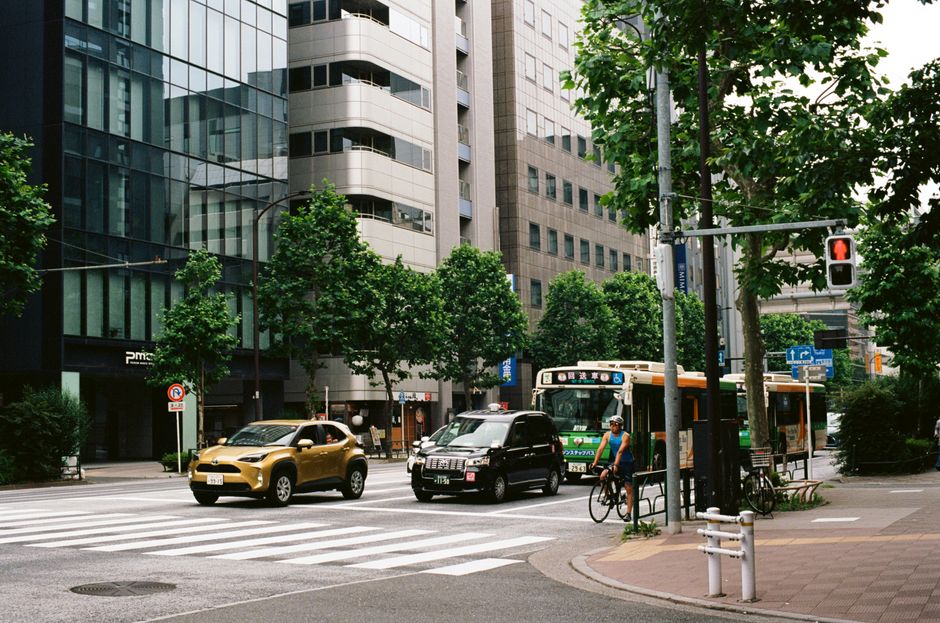
Tokyo's municipal and private sectors are grappling with a quiet but costly problem: duplicate images clogging databases, inflating storage costs and degrading the quality of public-facing digital services — and the people tasked with fixing it have a lot to say about who is responsible and how fast the cleanup needs to happen.
The issue has sharpened this summer partly because the Tokyo Metropolitan Government's Digital Services Bureau, headquartered in the Nishi-Shinjuku government complex, has been accelerating its DX — digital transformation — roadmap ahead of a self-imposed 2027 deadline to migrate core public services fully online. Duplicate imagery, accumulated across years of decentralized ward-level data entry, has emerged as one of the principal obstacles to a clean migration. Housing data for central wards like Minato and Chiyoda, where inbound tourism has supercharged short-term rental listings, is among the worst affected.
Japan's Ministry of Internal Affairs and Communications reported in its 2025 local government IT audit that redundant file storage — which includes duplicate images in municipal systems — costs prefectural and city governments an estimated 12 billion yen annually in unnecessary cloud infrastructure spending nationwide. For a city of Tokyo's scale, digital infrastructure experts familiar with the bureau's internal reviews say the proportionate share is significant, though the bureau has not published a Tokyo-specific figure.
The real-estate sector is feeling it differently. At-Tokyo, a mid-sized property technology firm operating out of the Shibuya Scramble Square tower, has been developing AI-assisted deduplication tools aimed specifically at J-REIT property photo archives. The firm has described the volume of redundant listing images in the Tokyo metropolitan market as a structural inefficiency, noting publicly that some major Chuo ward property databases contain duplication rates exceeding 30 percent for standard interior photography.
Academics at Waseda University's Graduate School of Information, Production and Systems have been studying the downstream effects of image duplication on machine-learning models trained on public urban data — specifically the models that underpin smart city initiatives tied to the Toranomon Hills and Takeshiba digital urban planning zones. Researchers there have argued in published papers that training datasets contaminated by duplicates skew model outputs and inflate apparent consensus in pattern recognition, producing what one 2025 paper called a "false majority" effect in predictive planning tools.
Inside the Tokyo Metropolitan Government, the conversation has become political at the margins. The Bureau of Urban Development and the Digital Services Bureau have overlapping mandates when it comes to the city's Geographic Information System — GIS — layers, which incorporate tens of thousands of street-level and aerial images updated on rolling cycles. Ward officials in Sumida and Koto, speaking through their respective ward offices' published administrative reports, have flagged the duplication issue as a bottleneck in local infrastructure planning workflows, particularly for flood-risk mapping along the Arakawa river corridor.
Governor Koike Yuriko's administration has positioned digital efficiency as a centerpiece of its broader fiscal responsibility messaging, with the Metropolitan Government's FY2026 budget allocating resources to the Smart Tokyo Implementation Strategy. Deduplication and data hygiene are referenced within that strategy's technical annexes, though specific line-item spending on image-specific tools has not been disclosed in public budget documents.
Technology vendors working in the public-sector space point to the National Institute of Informatics in Hitotsubashi, Chiyoda ward, as a critical resource — the institute has published open-source guidance on perceptual hashing methods for image deduplication that several Tokyo ward offices have cited in tender documents for IT procurement over the past 18 months.
What happens next depends largely on whether the Digital Services Bureau sets a binding data quality standard before the 2027 migration deadline. Procurement specialists advising ward governments recommend that any agency still running legacy content management systems — particularly those installed before 2019 — conduct a full image audit before the fiscal year ends in March 2027. For the private sector, the more immediate pressure is competitive: property platforms that clean up their listings data first stand to gain measurably in search ranking on major portals like SUUMO and HOME'S, where duplicate content is increasingly penalized by algorithmic filters.
How does this story make you feel?
Spread the word
About this article
Published by The Daily Tokyo
Daily brief
Free, in your inbox before 7am. Weekdays.
More in News