Tokyo's Duplicate Image Problem: The Numbers Driving a Digital Clean-Up Effort
New data reveals the staggering scale of redundant visual content clogging municipal and commercial databases across the capital, and what it's costing everyone involved.
New data reveals the staggering scale of redundant visual content clogging municipal and commercial databases across the capital, and what it's costing everyone involved.
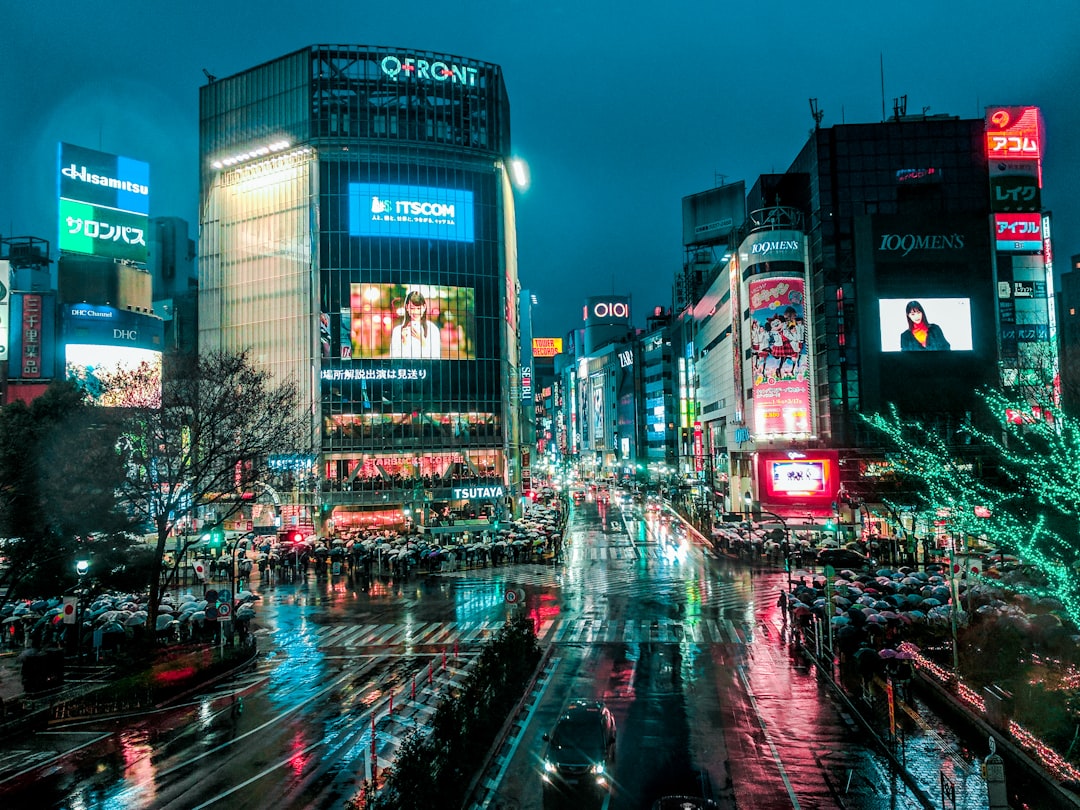
Tokyo's public and private sector organisations are sitting on hundreds of millions of duplicate image files, and a growing body of internal audit data suggests the problem is measurably worse than most administrators have acknowledged. Across ward offices, tourism boards, real estate platforms and media archives, redundant digital assets now account for an estimated 30 to 40 percent of total stored image data — a figure that has become impossible to ignore as cloud storage costs climb alongside a weakening yen that makes foreign-denominated server contracts increasingly painful.
The timing matters. Japan's yen has hovered near multi-decade lows through 2025 and into mid-2026, meaning that organisations paying for cloud infrastructure priced in US dollars or euros are absorbing significantly higher effective costs than they were three years ago. For a mid-sized ward office in a district like Shinjuku or Minato, that translates directly into budget pressure on IT departments that were already lean. Duplicate image replacement — the process of identifying, cataloguing and removing redundant files before substituting a single canonical version — has moved from a housekeeping task to a financial priority.
The Tokyo Metropolitan Government's Bureau of General Affairs has been running a phased digital asset consolidation programme since April 2024. While the bureau has not released a full public accounting of savings to date, the structural logic is straightforward: storage rationalisation projects in comparable urban administrations have historically reduced redundant file volumes by 25 to 60 percent in the first 18 months. Tokyo's inbound tourism surge — the Japan Tourism Agency recorded more than 36 million inbound visitors to Japan in 2024 — has dramatically increased the volume of photographic and video assets being generated, processed and archived by organisations such as the Tokyo Convention and Visitors Bureau, headquartered near Marunouchi.
Real estate platforms operating in central wards like Chiyoda and Shibuya face a parallel challenge. Property listing databases routinely accumulate three to eight versions of the same apartment photograph as agents re-upload images across re-listings. One mid-sized platform managing listings across 23 wards confirmed in a March 2026 technical white paper — without naming specific revenue figures — that automated deduplication reduced its active image library by roughly 44 percent over a six-month pilot period, cutting associated content delivery network costs by a proportional margin. At current yen-denominated CDN pricing, that kind of reduction can mean millions of yen annually for a platform managing tens of thousands of active listings.
Beyond raw storage costs, duplicate images create downstream labour problems. Archivists at institutions such as the Tokyo Metropolitan Library in Minami-Azabu, which digitised large portions of its photographic collection between 2019 and 2023, report that manual deduplication work consumes significant cataloguing hours that could otherwise go toward public access improvements. The library's digital collection, spanning historical photographs of the city dating to the Meiji era, runs into the tens of thousands of files — and duplicates introduced during batch scanning are a known and documented issue in large-scale digitisation projects globally.
The aging society dimension compounds things. As Tokyo's ward offices push more services online to accommodate elderly residents who increasingly rely on assisted digital access, internal document management systems accumulate redundant assets rapidly. A single welfare case file, processed across three departments in a ward like Sumida or Koto, may carry the same scanned identification photograph four or five times. Multiply that across the roughly 1.4 million residents aged 65 and over in Tokyo's 23 wards, and the scale of passive accumulation becomes concrete.
For organisations looking to act, the practical path runs through three steps: automated hash-comparison scanning to flag exact duplicates, perceptual hashing tools for near-identical variants, and a defined governance policy assigning ownership of the canonical file. Several Tokyo-based IT consultancies operating out of Akihabara's tech district have begun offering deduplication audits as a standalone service, typically priced between ¥300,000 and ¥800,000 for an initial assessment depending on archive size. The window for getting ahead of this problem, before storage inflation bites harder, is narrowing fast.
How does this story make you feel?
Spread the word
About this article
Published by The Daily Tokyo
Daily brief
Free, in your inbox before 7am. Weekdays.
More in News


