Tokyo's Duplicate Image Problem: The Key Decisions Ahead for a City Drowning in Its Own Visual Archive
As digital records pile up across ward offices and public databases, administrators face a defining choice about how—and how fast—to clean house.
As digital records pile up across ward offices and public databases, administrators face a defining choice about how—and how fast—to clean house.
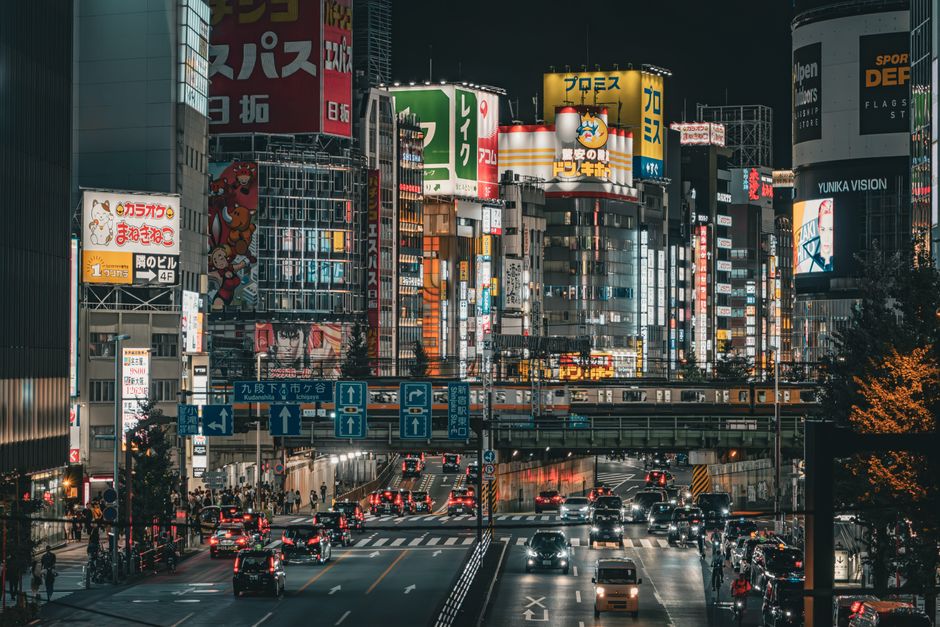
Tokyo's municipal digital infrastructure has a clutter problem. Across the city's 23 special wards, government-run platforms and public-record databases have accumulated tens of thousands of duplicate images—redundant photographs, scanned documents stored twice or three times over, and identical graphics filed under different catalogue numbers—that are quietly inflating storage costs and slowing retrieval systems at ward offices from Shinjuku to Kōtō. The question now is not whether to act, but which technical and policy path the metropolitan government takes, and how quickly.
The timing matters for several reasons. The Tokyo Metropolitan Government is midway through a multi-year digital transformation push, with the Digital Services Bureau targeting full interoperability of ward-level data systems by fiscal year 2027. Duplicate images clog that pipeline. Beyond the bureaucratic inconvenience, the yen's sustained weakness has pushed up the cost of cloud storage contracts denominated in US dollars, making every redundant gigabyte a measurable budget line item. And with inbound tourism continuing to surge—visitor numbers to the city have climbed sharply since pandemic-era restrictions lifted—the public-facing portals used to serve both residents and tourists need to run cleanly.
Inside Shinjuku Ward's general affairs division on Kabukichō-line corridor side streets, staff describe a situation familiar to administrators citywide: scanned permit documents uploaded by multiple departments with no single master record, tourism brochure photographs saved in three resolutions under three different filenames, and disaster-preparedness maps duplicated across the ward's emergency management subdomain and its main public site. The Tokyo Metropolitan Archives in Marunouchi holds physical and digital records spanning decades; its digital catalogue unit has flagged image deduplication as a priority task in its rolling three-year digitisation plan.
The Tokyo Metropolitan Government's Digital Services Bureau, established in 2021, is the natural home for a city-wide fix, but the bureau has so far focused its published roadmap on resident-facing e-government services rather than backend data hygiene. Smaller wards have meanwhile been experimenting independently: Suginami Ward launched a pilot in late 2024 using open-source image-hash comparison tools to identify duplicates in its cultural property photograph library, reducing file count by roughly 30 percent within six months of deployment, according to the ward's own publicly released project summary.
Three choices are converging. First, procurement: the metropolitan government must decide before the end of fiscal year 2026—closing March 31, 2027—whether to issue a unified tender for a city-wide deduplication platform or allow each of the 23 wards to procure individually. Unified procurement would standardise metadata tagging and cut per-unit cost; fragmented procurement preserves ward autonomy but risks creating 23 incompatible systems that simply relocate the problem.
Second, the AI question. Several large Japanese technology vendors active in the Ōtemachi business district have pitched machine-learning-based image recognition as the fast route to deduplication at scale. The counterargument, raised in Digital Services Bureau working papers circulated in spring 2026, is that AI-assisted deletion carries a risk of false positives—purging images that are visually similar but legally or historically distinct. A manual-review fallback is expensive. A Tokyo Metropolitan University research group studying digital archiving has noted in published work that metadata verification, not visual similarity alone, is the safest deduplication standard for public records.
Third, staffing. Ward offices are already stretched by Japan's broader aging-workforce squeeze. The Chiyoda Ward office near the Imperial Palace grounds, for example, has a digital records team of fewer than ten full-time employees managing archives for roughly 67,000 registered residents plus a daytime population several times larger. Without either additional headcount or a reliable automated pipeline, deduplication work competes directly with day-to-day operations.
The practical path forward points toward a phased approach: the Digital Services Bureau publishing a common metadata standard by autumn 2026, wards running pilot deduplication exercises against that standard through winter, and a consolidated procurement decision by the first quarter of 2027. Missing that window means the problem compounds into the next storage contract cycle—and given current dollar-denominated pricing, that bill will be larger than the one sitting on the desk today.
How does this story make you feel?
Spread the word
About this article
Published by The Daily Tokyo
Daily brief
Free, in your inbox before 7am. Weekdays.
More in News