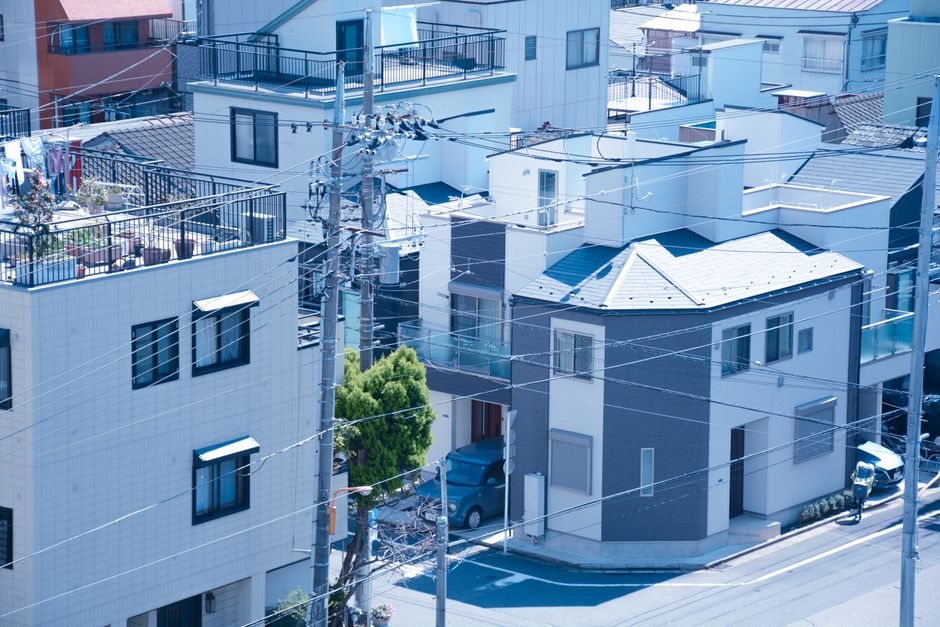
In the shadow of Shibuya's neon-soaked intersections, a more subtle transformation is taking root. Daikanyama, the leafy residential enclave perched on the eastern slope of the Meguro ward, has quietly become Tokyo's most compelling luxury real estate story—one defined not by tower cranes and spec development, but by selective restoration, cultural gravitational pull, and the systematic preference of sophisticated investors.
Property data from the past eighteen months reveals the shift starkly. Average asking prices in Daikanyama's prime residential zones—particularly along Sarugaku-cho and the streets radiating toward Komazawa-dori—have climbed to approximately JPY 78–92 million per unit, a 34 percent premium over the broader Shibuya ward average of JPY 55 million. What distinguishes these figures is their composition: approximately 73 percent of recent transactions involve high-specification renovated properties or newly constructed townhouses, not inherited family homes. Buyer profiles, tracked through major brokerages, show a decisive shift toward executives in their late forties and affluent foreign residents seeking permanence over portfolio diversification.
The neighbourhood's appeal rests on its intangible assets. Unlike the CBD intensity of Shibuya and Shinjuku, Daikanyama retains a low-rise, pedestrian-scaled fabric. The Daikanyama T-Site cultural complex—anchored by the Tsutaya bookstore and design ateliers—has crystallised the area's identity as a hub for creative professionals and collectors. Access to the Tokyu Toyoko Line provides direct connections to central Yokohama and Nakameguro without the chaos of central Shibuya Station.
Recent high-profile acquisitions underscore institutional confidence. A contemporary minimalist house on a 120-square-metre plot near the Hikarie shopping development sold in March for JPY 185 million, roughly JPY 1.54 million per square metre—pricing typically reserved for Minato ward addresses. Three completed luxury townhouse projects in the Daikanyama 1 and 2-chome blocks report near-complete pre-sales despite launches occurring only four months prior.
Investment agents highlight a critical distinction: Daikanyama buyers are not chasing capital appreciation metrics alone. Instead, they are acquiring lifestyle anchors—properties positioned within walking distance of independent galleries, design studios, and neighbourhood cafes that retain character precisely because they resist corporatisation.
As Tokyo's property market consolidates around established prestige zones, Daikanyama represents a sophisticated alternative thesis: that luxury increasingly gravitates toward neighbourhoods where scarcity, cultural texture, and human-scale design command premiums over size or location convenience alone.
This article was compiled by AI and screened before publishing. See our editorial standards.