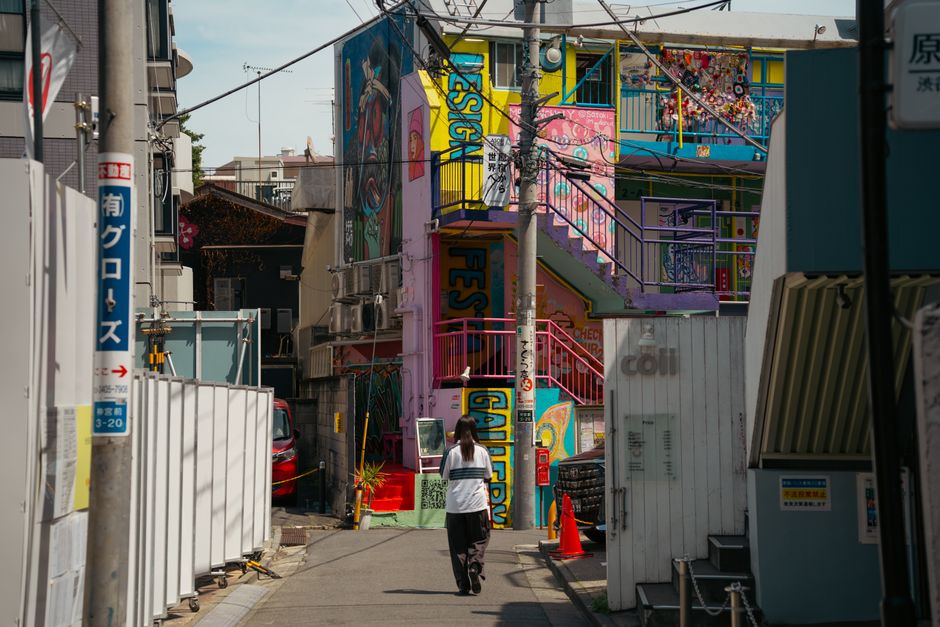
Walk through Hatagaya in Shibuya ward on any weekend afternoon and you'll witness something that would have seemed impossible five years ago: crowds gathering to photograph murals on residential building walls. The neighbourhood, historically overshadowed by nearby Omotesando and Meiji-dori, has become the unlikely epicentre of Tokyo's most contentious cultural conversation: what role should street art play in a city obsessed with order and control?
The transformation accelerated sharply over the past eighteen months. Local business associations report a 340% increase in foot traffic to Hatagaya's main commercial stretch since major murals appeared on the Takeshita-dori parallel routes. Similar phenomena are rippling through Shimokitazawa's narrower lanes and pockets of Koenji, where independent landlords—often with ageing properties—have begun actively recruiting artists rather than fighting graffiti with paint-over campaigns.
"We're seeing a fundamental shift in how property owners view blank walls," says the curator at Independent Art Tokyo, a Roppongi-based gallery that now brokers muralist commissions. "Five years ago, a landlord would never permit this. Now they're asking: how do we get on this trend?"
Yet the boom has created friction. Tokyo Metropolitan Government's strict ordinances around public art remain largely unchanged—most street murals technically require permits that are rarely granted. This legal grey zone means artists operate in calculated ambiguity, and some neighbourhoods have seen community backlash from residents tired of their quiet streets becoming tourist attractions. Real estate prices in Hatagaya have climbed 12-15% year-on-year, pricing out longtime residents.
The Tokyo Metropolitan Art Museum and several ward offices are quietly exploring formalization. Shibuya ward piloted a "designated street art zones" programme in March, designating specific walls where muralists can apply for three-year permissions. The initiative aims to channel creative energy while maintaining the spontaneity that makes street art compelling—a delicate balance that has Tokyo's cultural establishment deeply divided.
What's generating genuine local conversation, though, isn't the institutional response. It's the question underneath: who decides what Tokyo looks like? For decades, that answer was corporate developers and government planners. Now, as younger generations claim public space through art, Tokyo's rigid urban hierarchy is being challenged in ways both exhilarating and unsettling. The city that perfected control is learning to negotiate with creative chaos—and nobody quite knows how that story ends.
This article was compiled by AI from the sources linked above and screened before publishing. See our editorial standards.