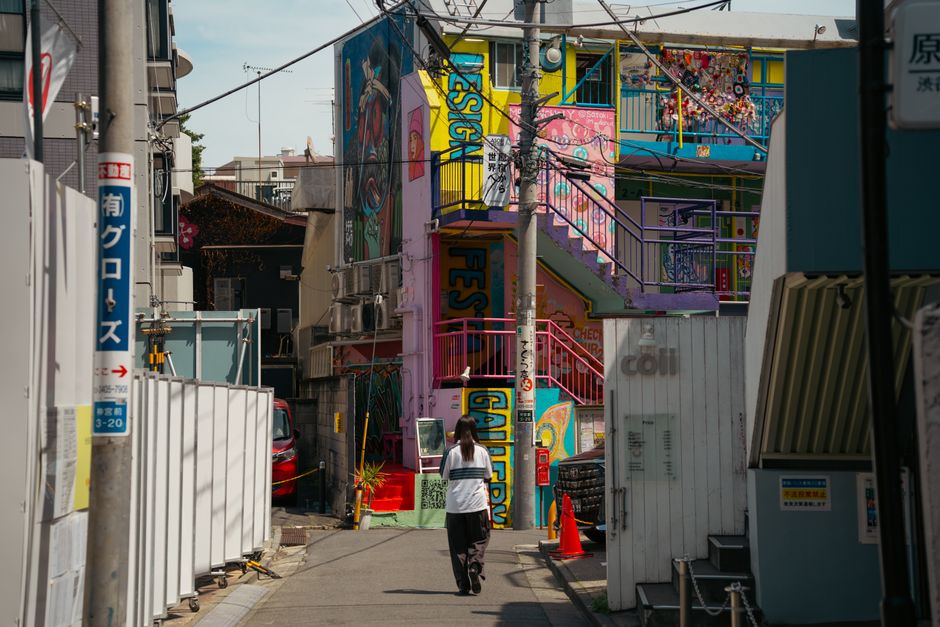
When Keisuke Yamamoto first started painting on the concrete walls behind the shuttered workshops of Shimokitazawa in 2016, few people noticed. The neighbourhood, facing gentrification pressures that would eventually claim many of its vintage theatres and bohemian venues, seemed indifferent to one artist's quiet rebellion. Today, that same alleyway—now known locally as "Kuro-dori," or Black Street—attracts roughly 8,000 visitors monthly and has become a case study in grassroots urban revitalisation.
Yamamoto's work didn't happen in isolation. A loose network of approximately 40 street artists, graphic designers, and community organisers began meeting informally at the now-defunct live music venue Shimokitazawa Tenran in 2017. What emerged was less a manifesto and more a shared frustration: Tokyo's rigid zoning laws and property owner conservatism had left vast stretches of urban space creatively dormant. The group decided to act.
By 2019, they'd secured unofficial permissions from building owners in three zones: the Meiji-dori underpasses near Harajuku Station, the Omotesando back alleys, and crucially, Shimokitazawa's post-closure district. The Tokyo Metropolitan Government initially resisted, citing vandalism ordinances dating to 1973. A turning point came in 2022 when the Shibuya Ward Office, recognising the economic potential—studies showed foot traffic in approved street art zones increased property values by 12-18%—formally designated certain areas as "creative expression zones."
The numbers tell a story of unlikely success. Licensed murals in these districts now number over 230. Artists report earning ¥150,000 to ¥400,000 annually from commissions, a modest but meaningful income in a city where creative work often goes unpaid. Local businesses report a 23% uptick in customer visits since 2023, according to a survey by the Shimokitazawa Business Association.
What distinguishes this movement from street art in other global cities is its deeply collaborative nature. Unlike the individualistic ethos that defined New York or Berlin's scenes, Tokyo's artists deliberately built governance structures. The Street Art Collective Tokyo, formed in 2021, now vets designs, mediates disputes with residents, and maintains a waiting list of 60+ emerging artists seeking wall space.
As Japan grapples with urban decline and aging populations in once-vibrant neighbourhoods, these creative districts offer an unexpected model: bottom-up cultural regeneration that respects both artistic freedom and community consent. Walking Shimokitazawa's transformed alleys today—where 15-year-old murals sit beside fresh commissions—it's clear the real masterpiece isn't any single work, but the ecosystem these artists built.
This article was compiled by AI from the sources linked above and screened before publishing. See our editorial standards.