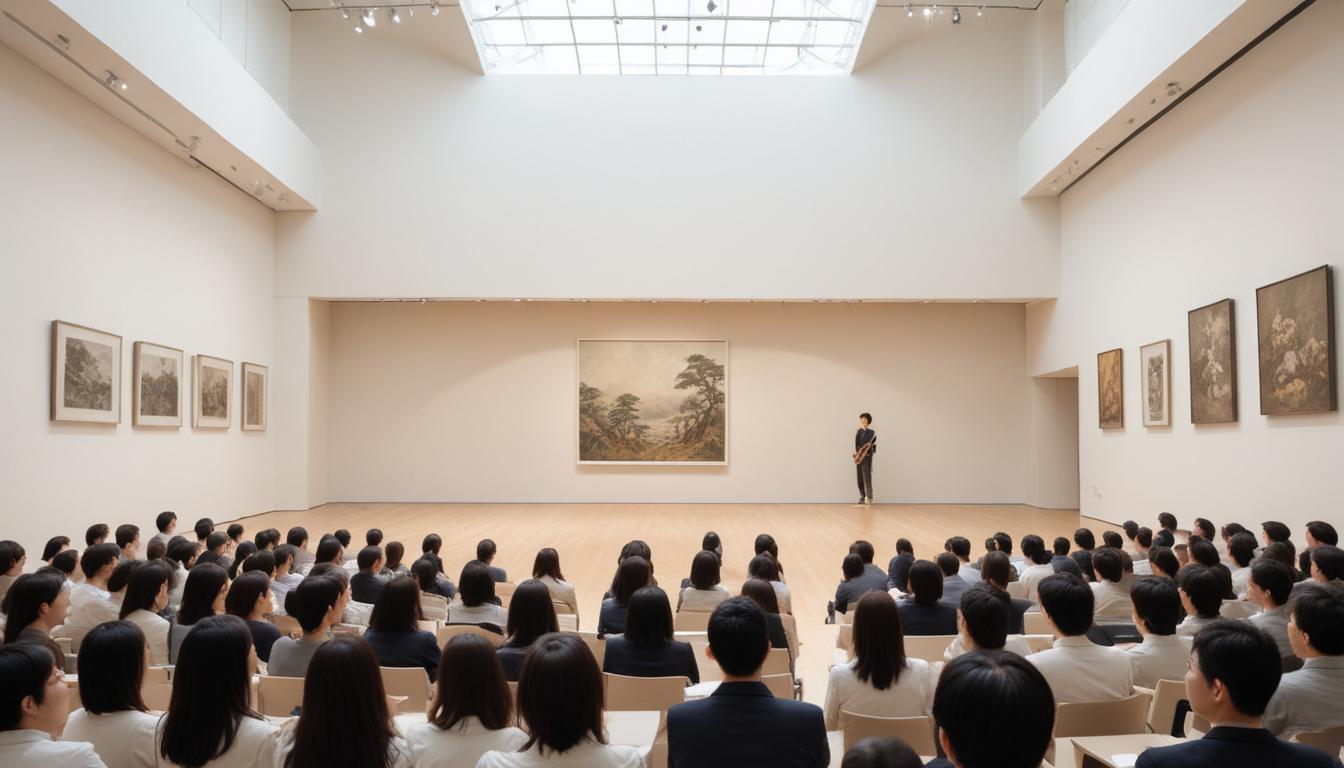
Walk through Ginza's back alleys these days and you'll notice a shift in the gallery landscape. Where once-established names dominated corner spaces along Chuo-dori, smaller venues are now banking on emerging talent, with several galleries reporting a 35% increase in footfall since early 2026—a marked change from the post-pandemic contraction that haunted Tokyo's art world just three years ago.
The momentum is palpable in neighborhoods like Asakusa and Kuramae, where younger Japanese artists are commandeering former textile warehouses and converting them into experimental exhibition spaces. Studios and galleries operating here rent at roughly ¥800,000–¥1.2 million monthly, substantially cheaper than Ginza's ¥2+ million tier, allowing emerging practitioners to take creative risks without crushing overhead. Galleries like those scattered around the Roppongi Art Triangle are watching closely, increasingly dedicating wall space to artists under 35 who combine traditional mediums—ceramics, woodblock printing—with digital-age conceptual approaches.
According to data from the Japan Contemporary Art Association, approximately 40% of gallery exhibitions across metropolitan Tokyo now feature debut or second-generation artists, up from 28% in 2023. Museum curators at the Mori Art Museum and Yokohama Museum of Art have similarly expanded their acquisitions budgets for emerging work, signaling institutional confidence in this cohort's trajectory.
What distinguishes this moment is thematic coherence. Many emerging voices are grappling with post-pandemic alienation, climate anxieties, and Japan's shifting demographic landscape—subjects that resonate with collectors seeking art that speaks to 2026 lived experience rather than abstract formalism. Works exploring themes of intergenerational memory and digital identity are moving quickly at smaller gallery openings in Shimokitazawa and Harajuku, where prices typically range from ¥300,000 to ¥2 million per piece.
The Museum of Modern Art, Kamakura, launched a dedicated emerging artist acquisitions program last year, while Tokyo's independent gallery network—coordinated through informal collectives rather than formal associations—has become increasingly influential in gatekeeping roles traditionally held by major dealers.
Gallery owners and curators remain cautious about over-optimism. The contemporary art market remains vulnerable to economic fluctuation, and international collectors who once drove Tokyo's sales have become more selective. Yet the current environment suggests something less predictable than boom-bust cycles: a genuine recalibration toward artists whose work commands attention not through institutional pedigree, but through clarity of vision and relevance to the moment.
For Tokyo's art world in 2026, emerging voices aren't just supplementary—they're becoming the conversation itself.
This article was compiled by AI from the sources linked above and screened before publishing. See our editorial standards.