From Postwar Textiles to Global Powerhouse: How Tokyo Became Fashion's Creative Capital
Tracing the evolution of Tokyo's design scene from its humble origins in Harajuku to its current status as a laboratory for avant-garde experimentation.
Tracing the evolution of Tokyo's design scene from its humble origins in Harajuku to its current status as a laboratory for avant-garde experimentation.
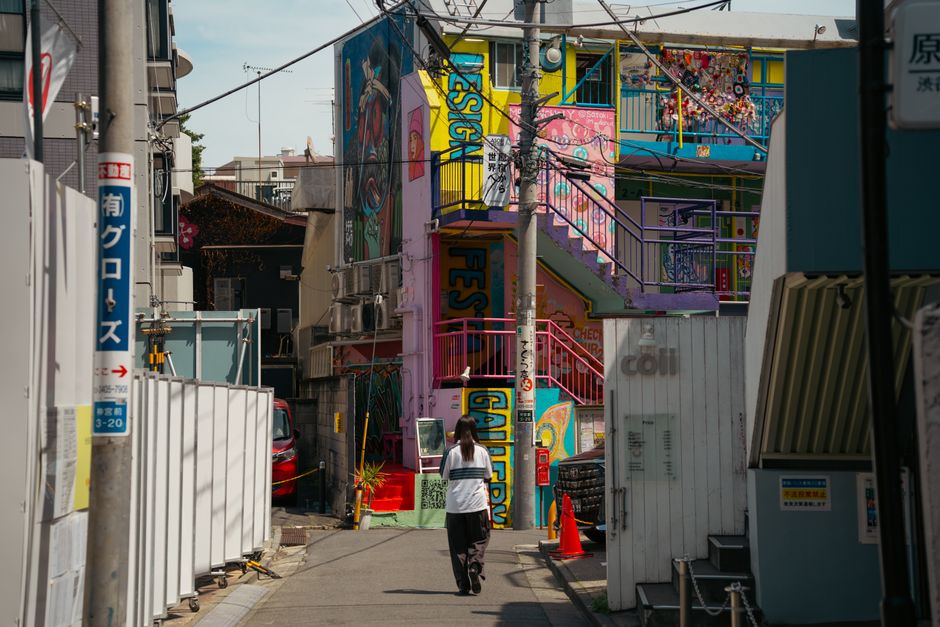
Tokyo's fashion industry did not emerge from vacuum or privilege. In the decades following 1945, when Japan's economy lay in ruins, the city's textile workshops in neighbourhoods like Nihonbashi and Honjo became engines of pragmatic innovation. Designers learned to work with limited materials, developing techniques that would later define Japanese minimalism. By the 1960s, ready-to-wear production had shifted the centre of gravity eastward, toward Harajuku, where young designers began experimenting with Western silhouettes filtered through distinctly Japanese aesthetics.
The 1970s and 1980s marked a tectonic shift. Designers like Rei Kawakubo and Yohji Yamamoto emerged from Tokyo's ateliers with deconstructionist approaches that challenged the fashion establishment in Paris and Milan. Omotesando, once a quiet tree-lined avenue leading to Meiji Shrine, transformed into what locals call the "Champs-Élysées of Tokyo." Today, a single square metre of retail space on Omotesando commands prices exceeding ¥10 million annually—a testament to the street's magnetic pull on luxury brands.
The creative infrastructure evolved in parallel. Showrooms clustered in Aoyama; manufacturing hubs developed in Kurogane and along the Sumida River; design schools proliferated, with the Mode Gakuen in Shinjuku becoming the nation's largest fashion academy. By 2010, Tokyo Fashion Week had become institutionalised at venues like the Roppongi Hills complex, drawing international buyers and press numbering in the thousands.
Yet the narrative shifted again around 2015. The rise of fast fashion and e-commerce threatened traditional wholesale models. Many designers migrated toward direct-to-consumer strategies, leveraging Tokyo's robust social media culture. Harajuku's Takeshita Street, once a breeding ground for experimental streetwear, became increasingly touristic. Simultaneously, a new generation of designers began exploring sustainable practices and digital fabrication, reclaiming abandoned workshops in areas like Kuramae for collaborative studios.
Today, Tokyo's fashion creative industries contribute an estimated ¥2.8 trillion annually to the economy. Yet the sector's true value lies not in GDP figures but in its role as a perpetual laboratory. From Harajuku's street fashion influencers to the conservation studios preserving kimono techniques in Nishi-Asakusa, Tokyo continues to synthesise tradition and disruption. The city's fashion evolution—from postwar necessity to aesthetic philosophy to digital-first experimentation—reflects a deeper truth: that creativity in Tokyo has always been born from constraint, cultural hybridity, and an unshakeable belief that beauty demands reinvention.
This article was compiled by AI from the sources linked above and screened before publishing. See our editorial standards.
How does this story make you feel?
Spread the word
About this article
Published by The Daily Tokyo
Daily brief
Free, in your inbox before 7am. Weekdays.
More in culture