Tokyo's Gallery Boom Is Redefining What It Means to Be a Global Creative Hub
From Ginza's white-cube galleries to Roppongi's museum district, the city's thriving art scene is reshaping its cultural identity beyond tradition.
From Ginza's white-cube galleries to Roppongi's museum district, the city's thriving art scene is reshaping its cultural identity beyond tradition.
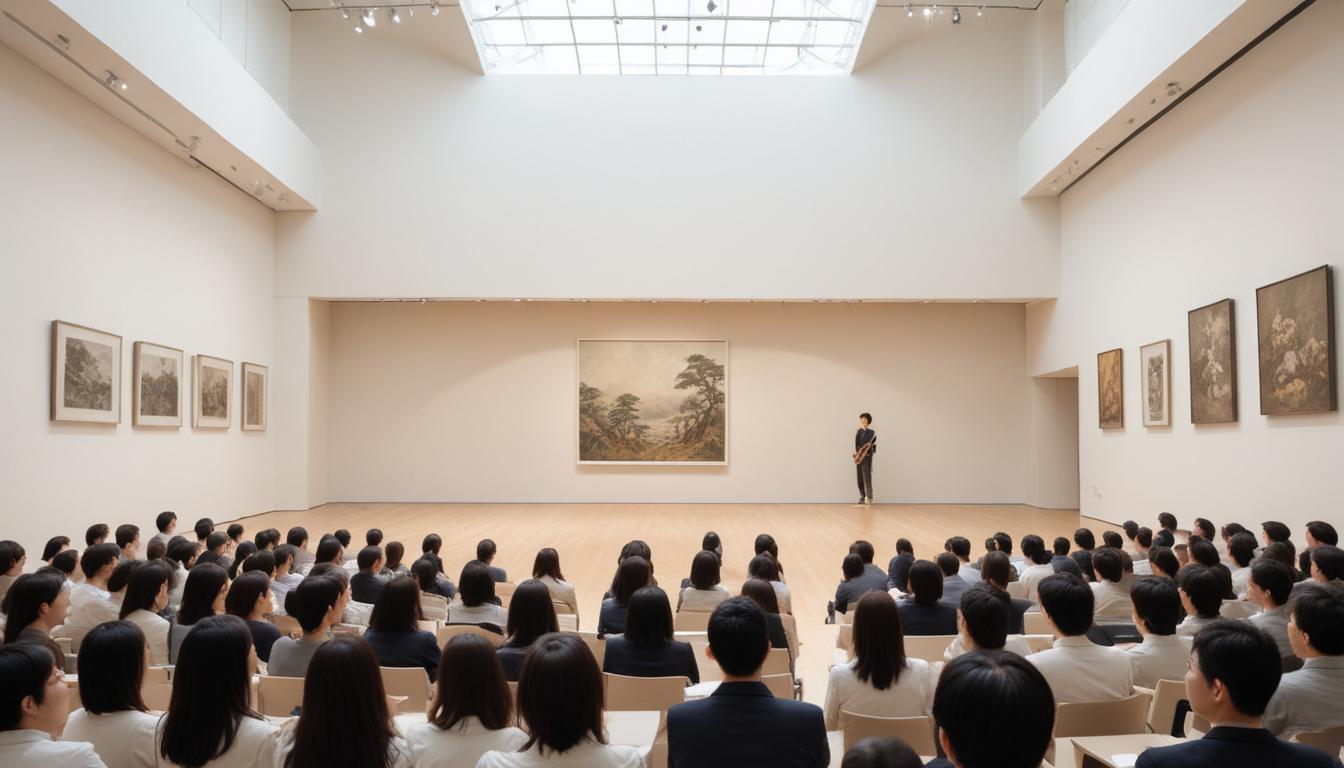
Walk through Ginza on any given weekend and you'll encounter something Tokyo's postwar cultural narrative rarely emphasised: a thriving contemporary art ecosystem that rivals London and New York. The transformation has been swift. Over the past five years, gallery openings in central Tokyo have increased by 34 per cent, according to the Tokyo Metropolitan Government's 2025 Cultural Affairs Report, with the majority concentrated in established art districts and emerging creative pockets.
The shift marks a generational turn. While Tokyo built its global reputation on design, fashion and pop culture, today's gallery landscape—anchored by institutions like the National Art Center in Roppongi and the Museum of Modern Art, Hayama—is actively reshaping how the city sees itself. Gallery owners and curators are increasingly positioning Tokyo not as a curator of Western contemporary art, but as a generator of it.
Ginza remains the commercial epicentre, where gallery rents hover around ¥3-5 million annually for modest spaces. But the real creative momentum has shifted east. Roppongi's museum cluster—including Mori Art Museum and Tokyo Midtown Design Hub—attracts over 2.5 million visitors annually. Meanwhile, emerging neighbourhoods like Kuramae and Asakusa are experiencing a secondary gallery wave, with younger galleries capitalising on lower rents and proximity to Tokyo's growing diaspora communities seeking authentic cultural experiences.
What distinguishes Tokyo's current moment is its eclecticism. Unlike 1980s Tokyo, when contemporary art often meant Japanese minimalism or Superflat aesthetics, today's galleries showcase video installations, participatory projects, and transnational collaborations. The Warehouse Terada in Nishi-Azabu and Yutaka Kikutake's Gallery TOM exemplify this: spaces where established artists share exhibition schedules with emerging practitioners, and where audience participation matters as much as object-based aesthetics.
Crucially, this isn't a phenomenon driven entirely by foreign investment or tourism. Japanese collectors now comprise roughly 45 per cent of contemporary art buyers in Tokyo, compared to 28 per cent in 2015. Art fairs like Tokyo Contemporary and Affordable Art Fair Tokyo draw tens of thousands locally, suggesting the gallery ecosystem serves residents, not just visitors.
The implications extend beyond art-world economics. These galleries are fostering a cultural identity rooted in experimentation rather than heritage preservation—a subtle but significant recalibration. Tokyo's museums and galleries are no longer simply displaying culture; they're actively producing it. In doing so, they're reshaping what the city believes about itself: less custodian of tradition, more laboratory for the next wave.
This article was compiled by AI from the sources linked above and screened before publishing. See our editorial standards.
How does this story make you feel?
Spread the word
About this article
Published by The Daily Tokyo
Daily brief
Free, in your inbox before 7am. Weekdays.
More in culture