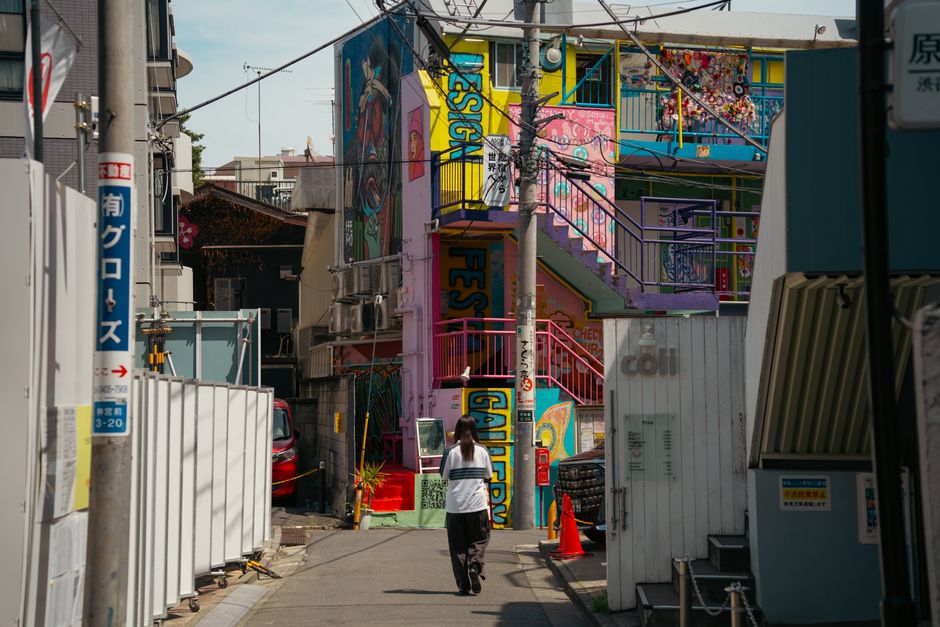
In 2009, when the Tokyo Metropolitan Government announced plans to demolish Shimokitazawa's aging theatre district, few predicted that graffiti would become the neighbourhood's unlikely saviour. Yet over the following decade, street artists transformed the area's condemned buildings into an open-air gallery that eventually convinced city planners to preserve rather than erase the district. Today, that preservation order stands as a testament to the power of creative resistance.
"We weren't trying to save Shimokitazawa—we were just trying to make something beautiful," recalls Takeshi Yamamoto, a Tokyo-based muralist who participated in those early illegal painting sessions along Omotesando-dori. Now 38, Yamamoto runs a legitimate public art programme with three studios across Shimokitazawa and mentors younger artists through the Tokyo Street Art Association, established in 2018 with funding from the ward office.
The transformation reflects a broader shift in how Japan's capital treats street culture. Harajuku's Takeshita Street, once a haven for underground tag writers in the 1990s, now hosts curated installations by the Harajuku Culture Council. The shift from prohibition to partnership has generated measurable economic impact: the street art tourism sector contributed an estimated ¥8.3 billion to Tokyo's creative economy in 2024, according to data from the Tokyo Metropolitan Government's Culture Bureau.
Equally significant is the demographic change. Where street art was once dominated by male crews competing for territory, contemporary districts like Roppongi's Midtown Design District and the revitalised Kuramae area now showcase work by 40% female artists, many pushing beyond aesthetic boundaries into social commentary. Artist collective Mujirushi, comprising five women founded in 2019, has painted murals addressing gender equity, environmental concerns, and labour rights across six Tokyo wards.
Yet success brings its own complications. Rising property values in Shimokitazawa have displaced some original artist collectives, with studio rents increasing 35% since 2019. Meanwhile, corporate commissions now dominate available wall space, raising questions about authenticity among purists who argue that regulated street art loses its transgressive power.
"The streets didn't need permission to be beautiful," says one anonymous artist whose work still appears in Shimokitazawa's less-touristy corners. "Now they do."
Still, as Tokyo prepares for another cultural moment—the 2032 Olympics will showcase street art as a centrepiece of the city's creative branding—one question lingers: can institutionalised street art retain the rebellious spirit that built these districts in the first place?
This article was compiled by AI from the sources linked above and screened before publishing. See our editorial standards.