Tokyo's Green Blueprint: How Japan's Capital Stacks Up Against Global Sustainability Leaders
While cities worldwide race to meet climate targets, Tokyo is charting its own path—with mixed results that reveal both ambition and challenges.
While cities worldwide race to meet climate targets, Tokyo is charting its own path—with mixed results that reveal both ambition and challenges.
Tokyo's commitment to becoming a sustainable metropolis is visible in the gleaming electric buses that now traverse the Ginza district and in the rooftop gardens sprouting across Shinjuku's corporate towers. Yet when compared to peers like Copenhagen and Singapore, Japan's capital reveals a more complicated picture of progress and constraint.
The Tokyo Metropolitan Government's 2030 carbon neutrality target mirrors ambitions set by cities across Europe and Asia. Last year, the city achieved a 39% reduction in greenhouse gas emissions compared to 2000 levels—a figure that sounds impressive until contextualized: Copenhagen has already surpassed 60% reductions, while Singapore's efficient urban planning has enabled similar achievements with far greater population density.
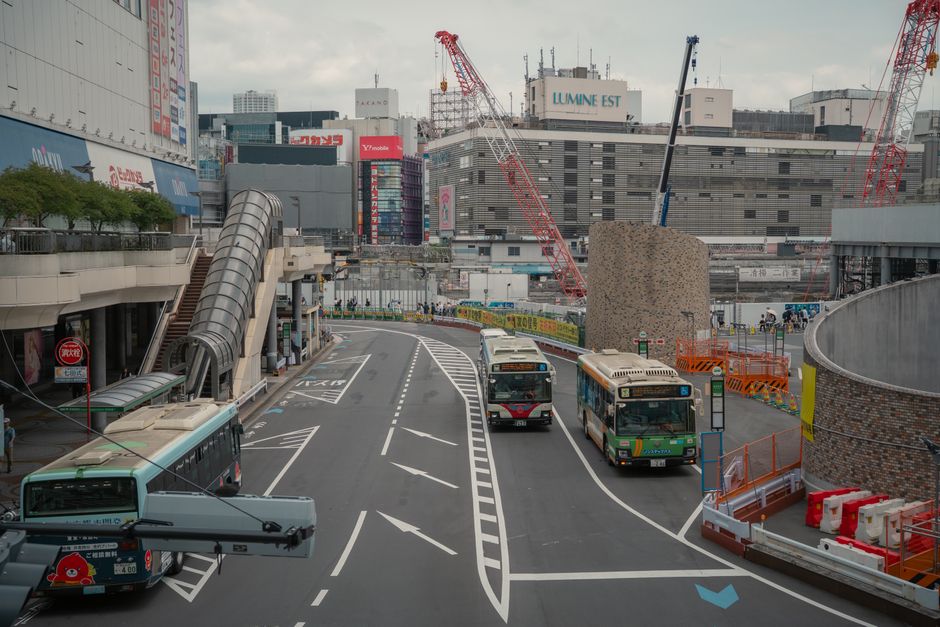
Where Tokyo excels is public transportation. The Yamanote Line and 13 subway networks that crisscross the city carry over 8 million passengers daily, effectively negating the need for private vehicles for most residents. Monthly passes cost roughly ¥1,000 more than in Seoul, yet ridership rates exceed those of most Western counterparts. This infrastructure advantage has long been Tokyo's sustainability ace.
The challenge lies elsewhere. Waste management remains contentious. While cities like Amsterdam have pioneered circular economy models, Tokyo's residents navigate one of the world's most byzantine recycling systems, with eight separate garbage categories that vary by neighborhood. A resident in Minato ward faces different rules than one in Shibuya, creating confusion that undermines participation.
Green spaces tell another story. Tokyo boasts the Meiji Shrine forest and Yoyogi Park, yet per-capita green space lags behind Berlin and Barcelona. Urban planners acknowledge the tension: preserving historical temple grounds while accommodating 37 million residents in the greater metropolitan area demands constant compromise.
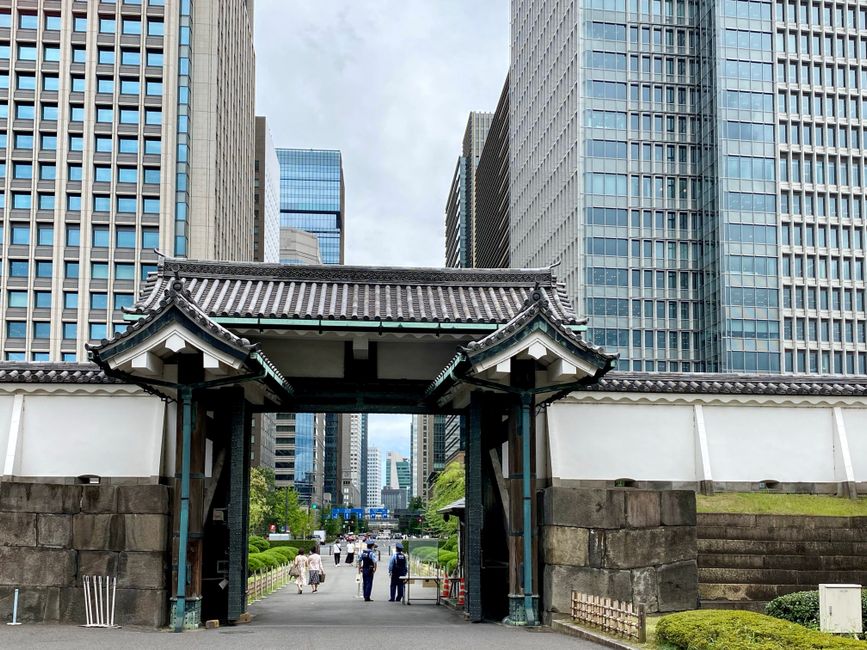
The city's corporate sector has emerged as an unexpected sustainability leader. Major companies headquartered in Marunouchi have voluntarily adopted net-zero commitments, with several pledging carbon neutrality by 2035—five years ahead of the city's target. This outpaces similar corporate initiatives in London and Toronto.
Tokyo's renewable energy transition, however, faces structural headwinds. Japan's post-Fukushima energy politics has complicated the city's reliance on nuclear power alternatives, forcing greater dependence on natural gas imports than comparable cities. Solar panel installations across residential rooftops have increased 47% since 2020, yet still represent a fraction of potential capacity.
What distinguishes Tokyo isn't radical innovation but rather incremental, consensus-driven progress. The city's sustainability story reflects its culture: methodical, hierarchical, and occasionally slow to adapt. As global cities race toward 2030 targets, Tokyo remains methodically on track—neither leading nor lagging, but distinctly itself.
This article was compiled by AI from the sources linked above and screened before publishing. See our editorial standards.
How does this story make you feel?
Spread the word
About this article
Published by The Daily Tokyo
Daily brief
Free, in your inbox before 7am. Weekdays.
More in News